Therapeutic wellness zone
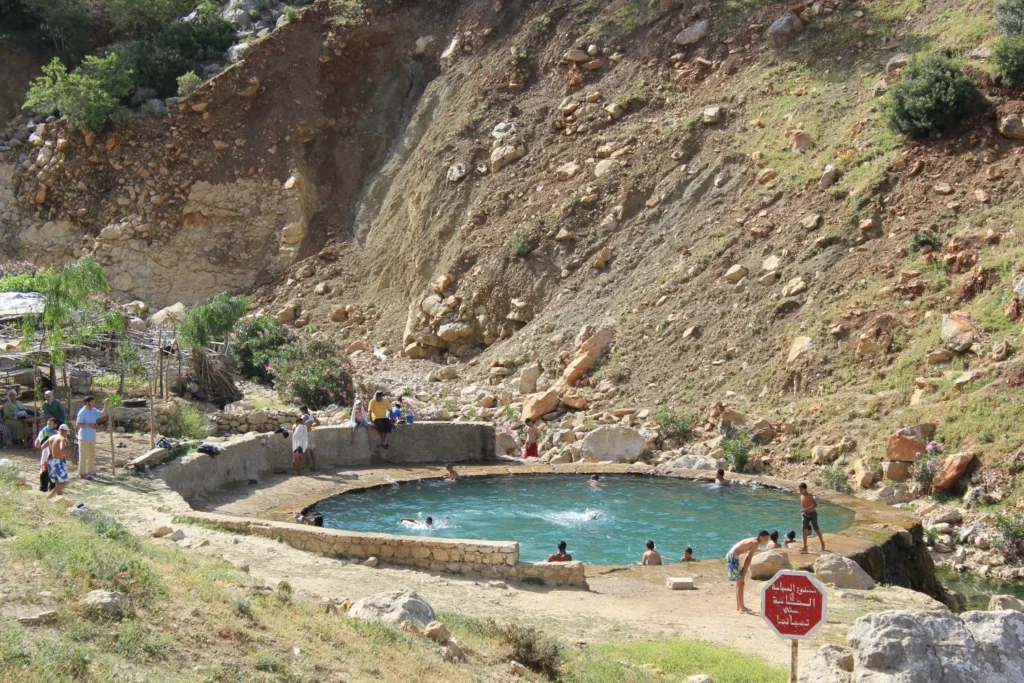
Ain Tizekert
Geographic Location and Setting
Location: High Atlas
Distance from Rabat: approximately 300 km
Lukewarm waters rich in minerals help improve blood circulation and treat certain skin conditions.
Aïn Tizekert is among Morocco’s natural springs with high environmental and therapeutic value. Its name is associated in local memory with pure water and natural tranquility. Over time, it has served as a source of life and stability for inhabitants while offering a space for traditional healing and psychological rest. Its name, of Amazigh origin, reflects the deep connection between people and water in local culture, often referring to the place where life emerges from the underground.
Site and Natural Environment
Aïn Tizekert is situated in a mountainous or semi-mountainous natural setting, marked by tranquility and positive isolation, far from major urban centers. Its environment is characterized by pure air, low pollution, and a clear ecological balance between natural vegetation and rocky formations, making it an ideal setting for rest and environmental healing.
This location gives the spring a dual role:
- A natural water resource for residents and traditional agriculture.
- A natural therapeutic space based on direct interaction with nature.
Water Properties
The waters of Aïn Tizekert originate from deep geological layers, giving them natural purity and continuous geological filtration. They are classified as fresh or light mineral waters, depending on the season and the soil composition they pass through.
They are traditionally used for:
- Drinking.
- Bathing.
- Folk medicine.
Residents believe its waters have beneficial effects on:
- Relieving joint and muscle pain.
- Improving blood circulation.
- Reducing physical fatigue.
- Supporting nervous balance and psychological calm.
The spring is generally exploited using simple methods, without industrial interventions, preserving its authentic natural character.
Health and Therapeutic Dimension
Although Aïn Tizekert is not necessarily classified among the major thermal springs, its therapeutic value lies in the integration between water and environment. Healing relies not only on the physical properties of the water but also on:
- Natural silence.
- Moderate climate freshness.
- Pure air.
- Distance from urban pressures.
This makes it a model of preventive environmental healing, focused on improving overall health and preventing stress and lifestyle-related diseases.
Social and Cultural Dimension
Aïn Tizekert has long been a social meeting point, where women and men would gather to draw water, bathe, or share peaceful collective moments.
The spring has also been associated with numerous oral narratives about “beneficial water” and the “baraka of the place,” notions deeply rooted in Moroccan culture expressing popular trust in nature as a source of healing.
Aïn Tizekert and Ecotourism
Aïn Tizekert has genuine assets to be included in Environmental Tourism itineraries thanks to:
- The simplicity of the site and absence of urban disfigurement.
- The purity of the water resource.
- Full integration with the environment.
- The possibility of development without harming the natural balance.
Small sustainable projects could be envisioned around the site, such as:
- Educational ecological trails.
- Rest areas in open nature.
- Non-medical preventive healing programs.
Challenges and Protection Prospects
Like many natural springs, Aïn Tizekert faces challenges related to:
- Neglect.
- Unregulated consumption.
- Lack of scientific documentation.
This calls for a protection strategy based on:
- Documenting water characteristics.
- Raising awareness within the local community.
- Integrating the spring into sustainable environmental development projects.
Aïn Tizekert is not simply a water spring: it is a natural and human space reflecting a simple healing philosophy based on harmony with nature. It perfectly illustrates the silent environmental treasures found in Moroccan geography, which could play an important role in the future of health tourism and Environmental Tourism if properly protected and enhanced.
Advertisements