Therapeutic wellness zone
Rissani
Geographic location and setting
Location: Tafilalet Oasis – South of Errachidia
Distance from Rabat: approximately 540 km
Rissani is built on fine desert sands surrounding the oases, which are less thermally intense than those of Merzouga, making it suitable for older people. Sand therapy here is often combined with local herbs and oils, and is used to treat chronic rheumatism, deep body chills, and circulatory disorders.
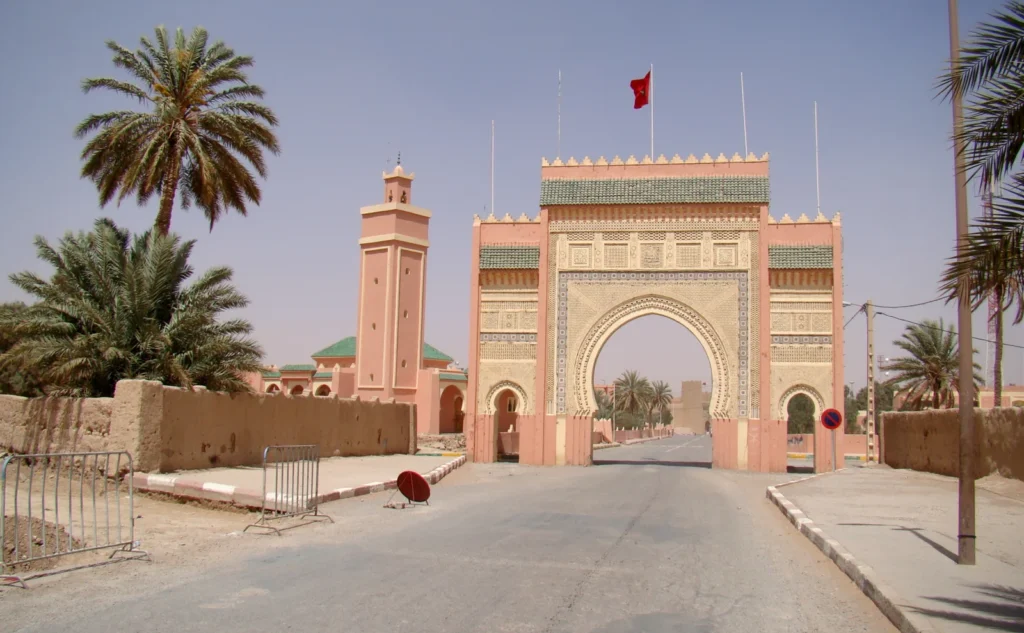
Rissani is located in eastern Morocco, on the northern edge of the Sahara, in the Tafilalet region. It is a historic city with a strategic geographic position that makes it a meeting point between the desert, the eastern plateaus, and the Atlas Mountains. The town is known for its deep cultural heritage, its unique Saharan landscape, and its historical role as an important station in the history of eastern Morocco, while also serving as a traditional center for therapeutic and heritage tourism.
Geographic site and natural environment
Rissani lies within a fertile oasis, surrounded by sand dunes and desert plains, crossed by seasonal wadis and fed by underground water sources essential for agriculture and local consumption. The town has a continental desert climate: hot and dry in summer, relatively cold in winter, with shifting dunes that give the town its distinctive Saharan character.
This natural environment provides essential elements for environmental healing:
- Pure air helps reduce respiratory illnesses.
- Desert calm supports psychological relaxation.
- Warm sunshine contributes to the natural production of vitamin D.
History and cultural heritage
Rissani was founded as an oasis along the ancient caravan routes linking the desert to inland regions, and it became a major stop for the trade of spices, dates, salt, and traditional goods.
The town is also known for its old ksour, ramparts, historic gates, and traditional souks, making it a living model of Saharan architecture and Moroccan cultural identity. Its name also carries a spiritual legacy, as it is home to the mausoleum of the holy man Sidi Ali Rissani, whose name is associated in popular memory with blessing and healing.
Springs and therapeutic hammams
Rissani stands out for having several mineral springs and natural hammams, including:
- Hammam Moulay Ali Cherif
- Ain Tizekert
- Hammam Sidi Hamou
These springs are known for their warm mineral waters, sought by residents and visitors to treat:
- Joint and rheumatic conditions
- Certain skin problems
- Physical and nervous fatigue
These sites also provide a strong basis for developing traditional therapeutic tourism and Environmental Tourism in the region, where visitors combine water-based treatment with immersion in the natural desert environment.
Local economy
The people of Rissani mainly depend on:
- Oasis agriculture, especially palm trees, dates, and vegetables.
- Livestock breeding and pastoralism.
- Traditional commerce and heritage tourism.
The town also experiences limited tourism activity centered on Saharan excursions, oasis visits, and discovery of natural hammams and mineral springs.
Culture and social life
Rissani is a center of Saharan culture, with a variety of popular activities such as:
- Agricultural season celebrations.
- Weekly markets.
- Traditional crafts such as pottery, textiles, and carpets.
- Traditional Amazigh music and folk dances.
These activities help preserve cultural identity and attract environmental and cultural tourism.
Ecotourism and natural healing
Rissani represents an integrated model of ecotourism and traditional therapeutic tourism, where visitors combine:
- Captivating Saharan landscapes.
- Green oases.
- Healing through mineral waters.
- Discovery of cultural heritage.
The town could become a model destination within sustainable Environmental Tourism projects in Morocco, provided that infrastructure is developed in respect of the environment and local culture.
Rissani is not just a Saharan town: it is a historical and natural oasis that brings together cultural heritage, enchanting landscapes, and healing through mineral waters. It perfectly illustrates how environment, water, and culture can come together in a complete therapeutic and tourism experience, making it a unique stop on the map of eastern Morocco.
Advertisements